
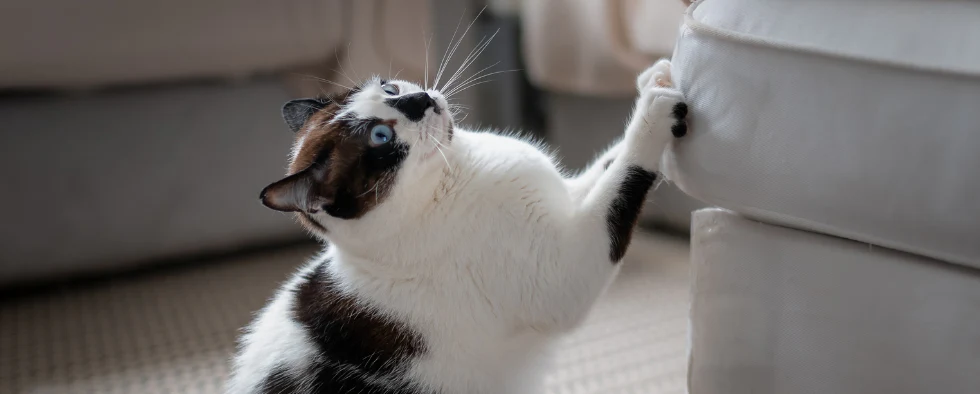
How to Stop a Cat from Scratching Furniture: The Aggressive Guide to Protecting Your Home
Cats scratching furniture is a universal frustration for pet owners. That luxurious sofa or brand-new wooden table can quickly become a victim of your cat’s claws. But scratching is natural cat behavior, not rebellion. Learning how to stop a cat from scratching furniture isn’t about punishment—it’s about understanding, redirecting, and training.
This guide provides proven, aggressive, step-by-step strategies to protect your home while keeping your cat happy and healthy.
Why Cats Scratch Furniture
Before tackling the problem, you need to understand the why. Scratching is instinctual. Cats scratch for several reasons:
-
Sharpening Claws – Cats shed outer nail layers.
-
Marking Territory – Claws leave visual and scent marks.
-
Stretching and Exercise – Helps maintain muscle and tendon health.
-
Stress Relief – Scratching reduces anxiety or boredom.
Punishing a cat for scratching never works long-term. Instead, redirecting behavior is key.
Step 1: Protect Your Furniture Immediately
Start by protecting furniture before your cat causes more damage.
-
Furniture covers: Use slipcovers, blankets, or protective films.
-
Double-sided tape: Cats dislike sticky surfaces; apply to scratch-prone areas.
-
Aluminum foil: Temporary deterrent—cats dislike the texture and sound.
-
Commercial scratch repellents: Sprays with citrus or pheromones can help.
Pro Tip: Cover problem areas immediately; cats learn fast.
Step 2: Provide Alternative Scratching Options
Redirecting your cat is more effective than punishment. Introduce cat-friendly scratching surfaces.
-
Scratching posts: Vertical posts encourage natural behavior.
-
Scratching pads: Horizontal surfaces for cats that prefer lying down while scratching.
-
Cat trees: Multi-level trees combine scratching, climbing, and lounging.
-
Material preference: Experiment with sisal, cardboard, carpet, or wood—cats are particular.
Aggressive Tip: Place new scratchers directly next to furniture to entice your cat away from the couch.
Step 3: Reward and Reinforce Positive Behavior
Cats respond to positive reinforcement, not scolding.
-
Treats: Reward your cat immediately after using a scratching post.
-
Playtime: Engage with toys near the post to encourage interaction.
-
Praise: Gentle petting or verbal praise reinforces good habits.
Tip: Timing is everything—reward within seconds of the correct behavior.
Step 4: Discourage Unwanted Scratching
Sometimes, direct deterrence is necessary.
-
Use scent deterrents: Citrus, lavender, or feline-safe sprays discourage scratching.
-
Textural deterrents: Sticky paws tape, foil, or plastic sheets temporarily discourage furniture scratching.
-
Double-sided tape or sticky mats: Highly effective on couches and chairs.
Avoid punishment—hitting, spraying water, or shouting can cause stress and worsen behavior.
Step 5: Trim Your Cat’s Claws Regularly
Keeping claws short reduces damage and keeps cats healthy.
-
Use nail clippers or grinders designed for cats.
-
Frequency: Every 2–3 weeks, depending on claw growth.
-
Technique: Only trim the white tip of the claw; avoid the quick (pink part).
-
Reward: Use treats or play to make trimming positive.
Claw trimming is preventive—fewer sharp edges mean less furniture damage.
Step 6: Understand Your Cat’s Preferences
Cats are picky. Understanding their scratching preferences helps you redirect effectively.
-
Vertical vs. horizontal: Some cats prefer posts; others love flat pads.
-
Material: Sisal, cardboard, carpet, and wood have different appeal.
-
Location: Cats scratch near sleeping areas, windows, or favorite resting spots.
Place scratchers strategically to maximize use.
Step 7: Address Stress and Boredom
Bored or stressed cats scratch more. Reduce stress to prevent furniture damage:
-
Interactive toys: Wand toys, laser pointers, and puzzle feeders.
-
Climbing structures: Cat trees, shelves, or perches provide vertical space.
-
Environmental enrichment: Window perches, bird feeders outside windows.
-
Routine: Feeding, playtime, and attention at consistent times reduce anxiety.
A stimulated cat is a well-behaved cat.
Step 8: Training Techniques for Persistent Scratching
Persistent scratchers may need training interventions.
-
Clicker training: Use a clicker to reinforce scratching post use.
-
Boundary training: Gently move your cat from furniture to post immediately.
-
Redirection: Offer toys near the post to encourage play and scratching.
Consistency and patience are essential—some cats take weeks to learn.
Step 9: When Furniture Damage Persists
If scratching continues despite training:
-
Evaluate scratcher placement and appeal – Try new materials or positions.
-
Use pheromone diffusers – Reduces stress and marking behavior.
-
Consider professional help – Cat behaviorists can address stubborn cases.
Remember: No single method works for all cats; combining strategies is most effective.
Step 10: Preventative Maintenance
After training, protect furniture long-term:
-
Maintain scratching posts in good condition
-
Trim claws regularly
-
Rotate toys and posts to maintain interest
-
Replace worn posts to keep cats engaged
Common Mistakes to Avoid
❌ Punishing your cat for scratching
❌ Ignoring material preferences
❌ Not providing enough alternatives
❌ Leaving claws untrimmed
❌ Failing to address stress or boredom
Avoiding these ensures long-term success.
FAQs: How to Stop a Cat from Scratching Furniture
1. Why does my cat scratch furniture even though I have a post?
Cats may prefer different textures, locations, or vertical/horizontal surfaces. Experiment with placement and materials.
2. Can I train a cat not to scratch at all?
Scratching is instinctual. Training should focus on redirecting behavior rather than eliminating it completely.
3. What materials do cats prefer for scratching?
Sisal rope, cardboard, carpet, and wood are most popular. Observe your cat to see which they like.
4. Will trimming my cat’s claws stop furniture damage?
Trimming reduces damage but doesn’t prevent scratching instincts. Combine with redirection.
5. Are sprays or deterrents safe for cats?
Yes, but always choose feline-safe products. Avoid harsh chemicals.
6. How many scratching posts should I have?
One per cat plus one extra is ideal. Place near furniture or sleeping areas.
7. Can declawing prevent scratching?
Declawing is not recommended. It’s painful, unethical, and creates behavioral problems.
Final Thoughts
Learning how to stop a cat from scratching furniture is about understanding, redirecting, and reinforcing behavior, not punishment. With the right combination of scratchers, training, deterrents, and enrichment, your cat can satisfy its natural instincts while your furniture remains intact.
Start early, stay consistent, and protect your home—your cat will remain happy, and your sofa will remain scratch-free.
3 Comments
Lorem ipsum dolor sit amet, consectetur adipiscing elit, sed do eiusmod tempor incididunt ut labore et dolore magna aliqua. Quis ipsum suspendisse ultrices gravida. Risus commodo viverra maecenas accumsan lacus vel facilisis.
Cras maximus ultricies volutpat. Praesent ut enim non enim vulputate fringilla.
Cras maximus ultricies volutpat. Praesent ut enim non enim vulputate fringilla.